Ten years ago, when I lived in Kunming, I always thought about going to Lijiang, but the long overnight train journey made me hesitate. Recently, living in Dali, I can reach Lijiang in just two hours by high-speed train, finally making that wish come true.
The intercity train from Dali to Lijiang travels north along the coast, offering distant views of the beautiful Cangshan and Erhai Lake. In contrast, heading to Kunming is towards the east, without these scenic sights.
As soon as I exited the station in Lijiang, I could see the majestic Yulong Snow Mountain across the way. Compared to the perpetually cloud-capped Cangshan, Yulong is far more magnificent. Cangshan is lush and dark, while Yulong, with its higher altitude and stark rocks capped with white snow, exudes a more aloof beauty.


I got off the bus at the South Gate of the ancient city and walked north along Qiyi Street. The streets of Lijiang Ancient Town are all paved with bluestone, with small rivers flowing through the town. Although not as spacious as Dali Ancient Town, it has a stronger sense of history, though commercialization is more pronounced. All the way to Sifangjie, there are various artistic shops, guesthouses, and specialty stores.


Continuing from Sifangjie, I began to ascend the hill, noticing many tourists struggling with their luggage on the rugged stone paths. Indeed, it’s not suitable to bring too much luggage when staying in the hills. After a long detour, I finally found the guesthouse I had booked, which was a two-story old wooden loft transformed from an alleyway. The interior was filled with ancient wooden furniture, giving a good sense of homeliness. There was even an oil heater running; although Lijiang is a few degrees colder than Dali, it seemed unnecessary.
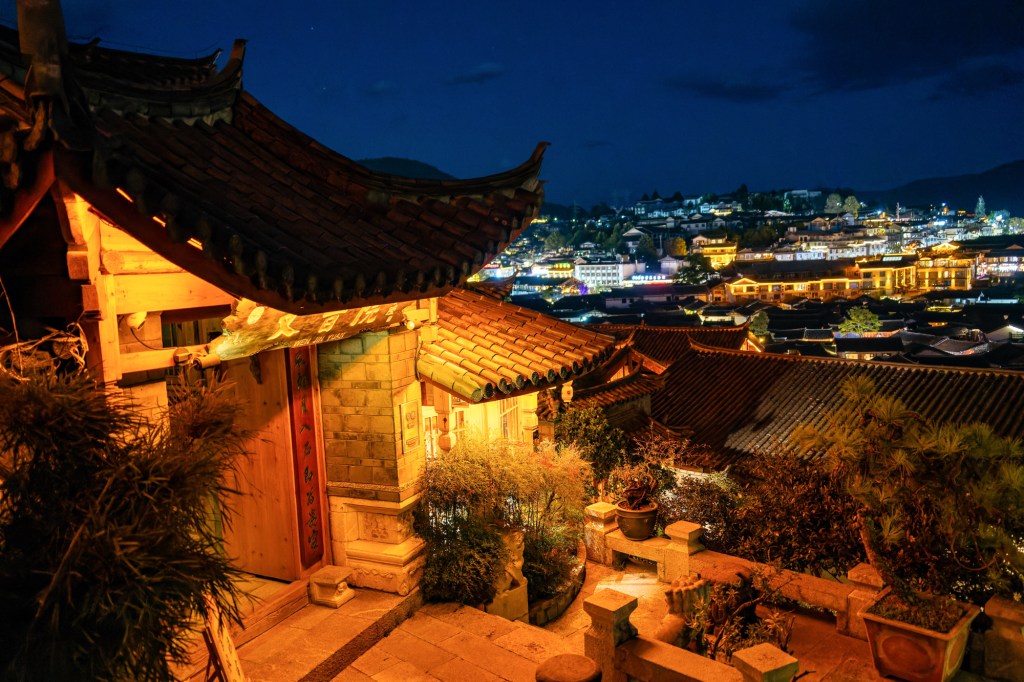
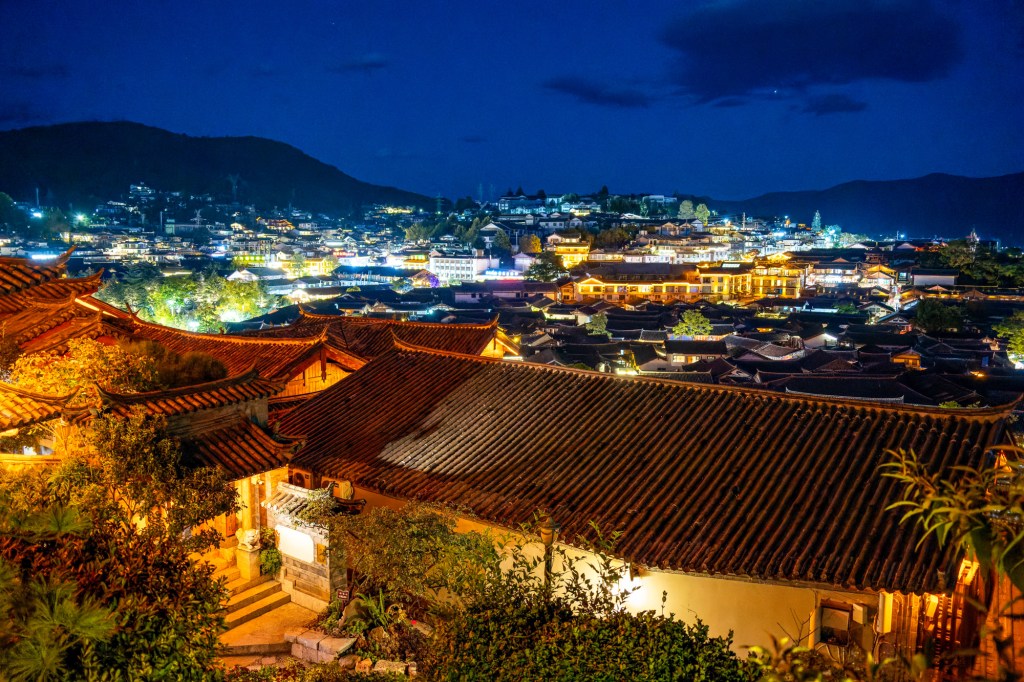
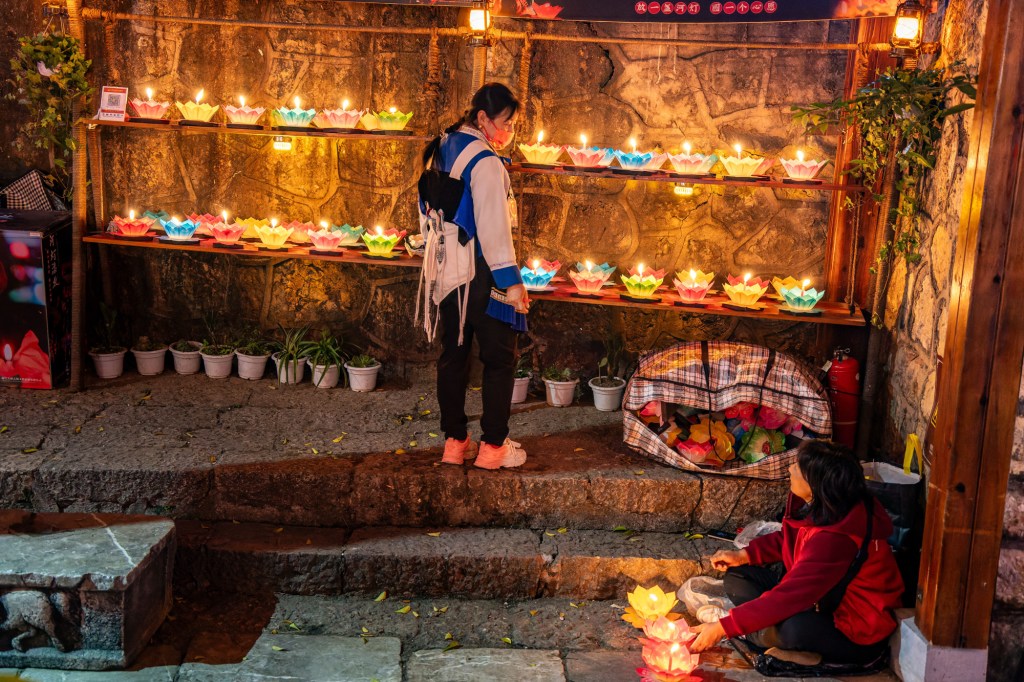
After settling in, I went down the mountain to find food. By now, it was late, and the town was lit up. Passing by the bar street, I happened to see street vendors setting up stalls to sell floating lanterns. I reached “Apo Salt Ribs” at the northwest corner of the ancient city, and surprisingly, there was still a half-hour wait even in the off-season. The taste was quite good, reminiscent of what I used to eat in An County years ago.
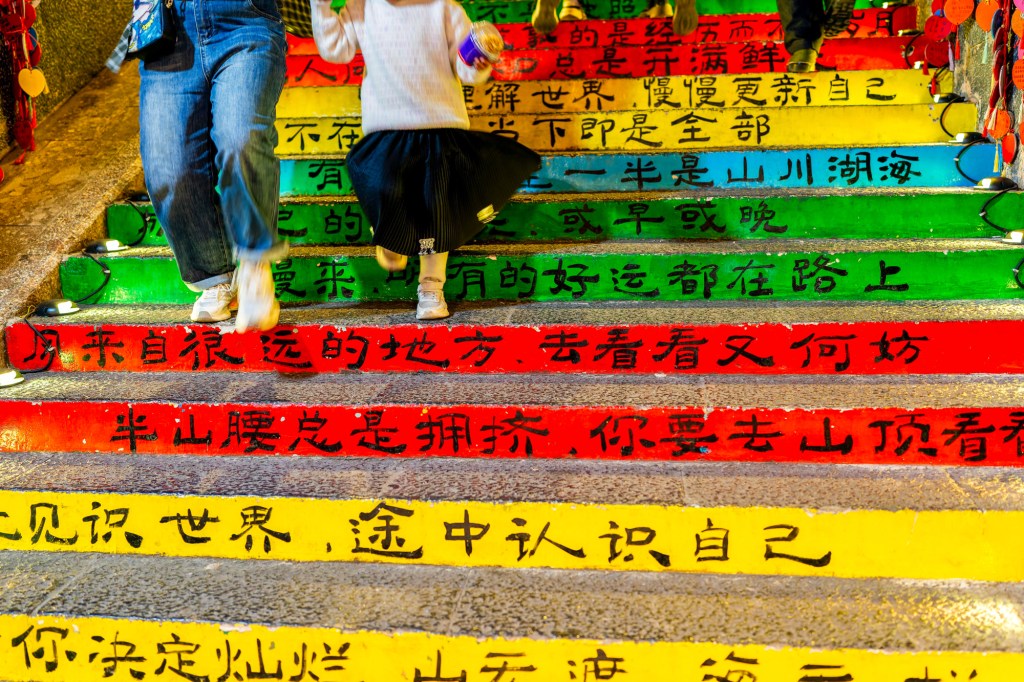
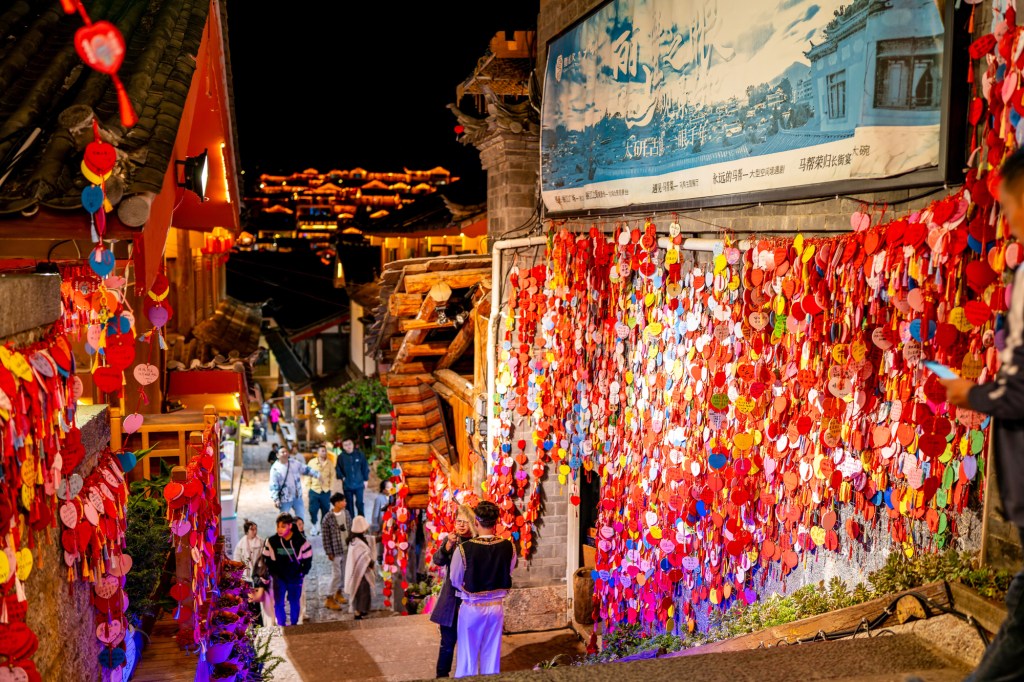


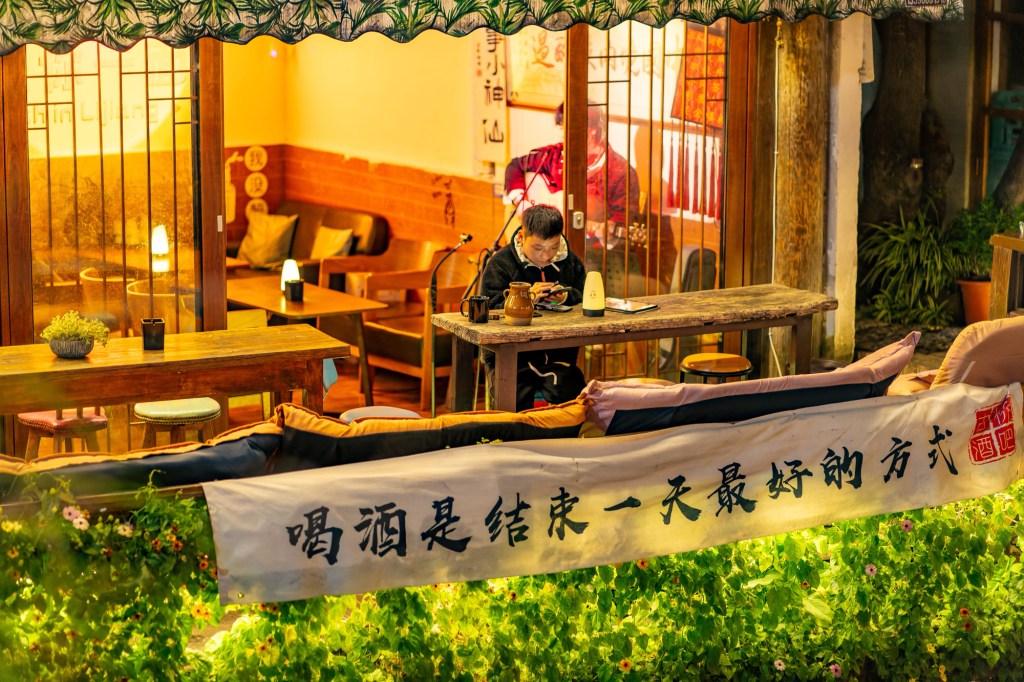
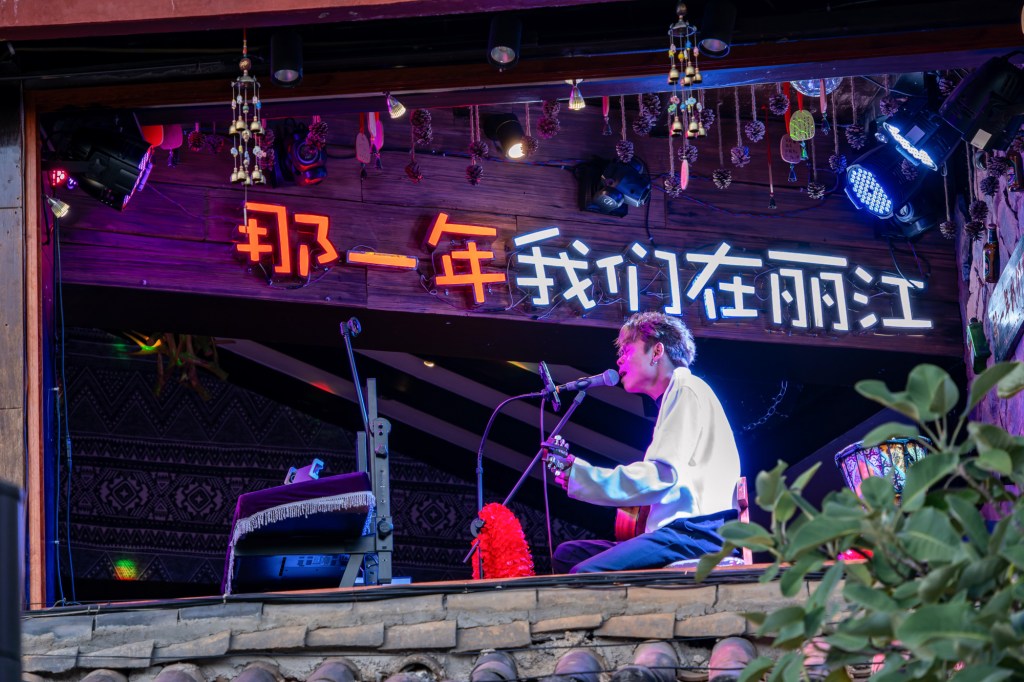
After dinner, I strolled around the ancient city. Near the South Gate Bridge, many girls were gathered for costume photo shoots, while the nearby bar was almost empty, with a lone singer softly crooning. This place truly feels like a suitable spot for relaxation.

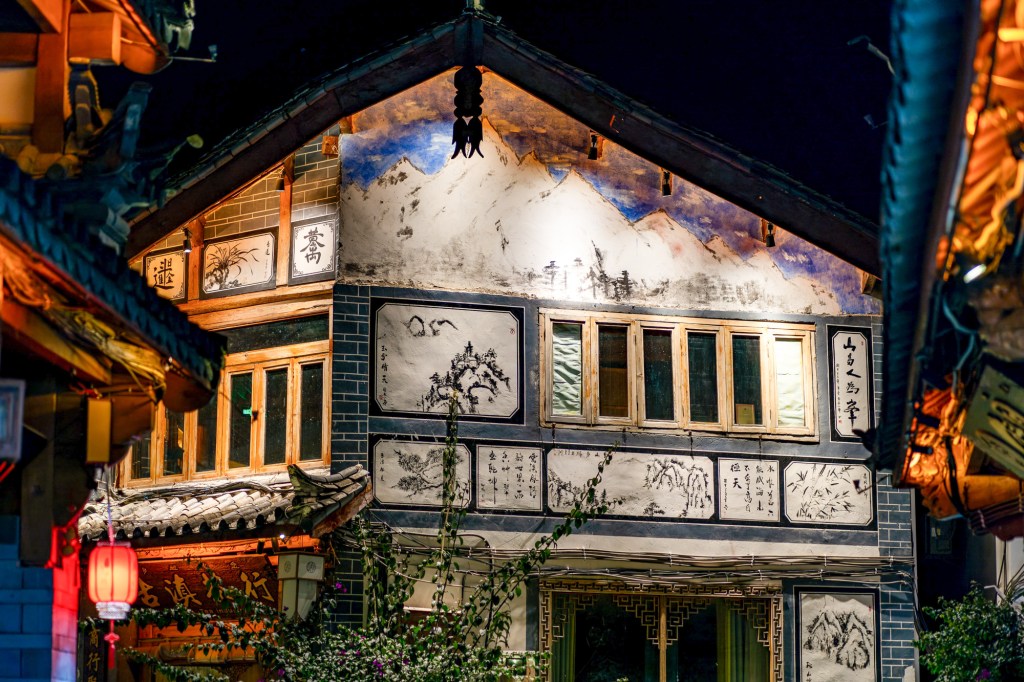
Walking to Zhongyi Market, it’s the boarding point for tomorrow’s trip to the snow mountain. It was already deep into the night, but to my surprise, the market was still bustling with diners. Continuing north, I reached the former residence of the local chieftains, the Mufu. The Naxi transliteration on the archway, “Tian Yu Liu Fang,” is quite interesting, and the Guanmenkou I passed earlier was indeed the ancient entrance to the Mufu.
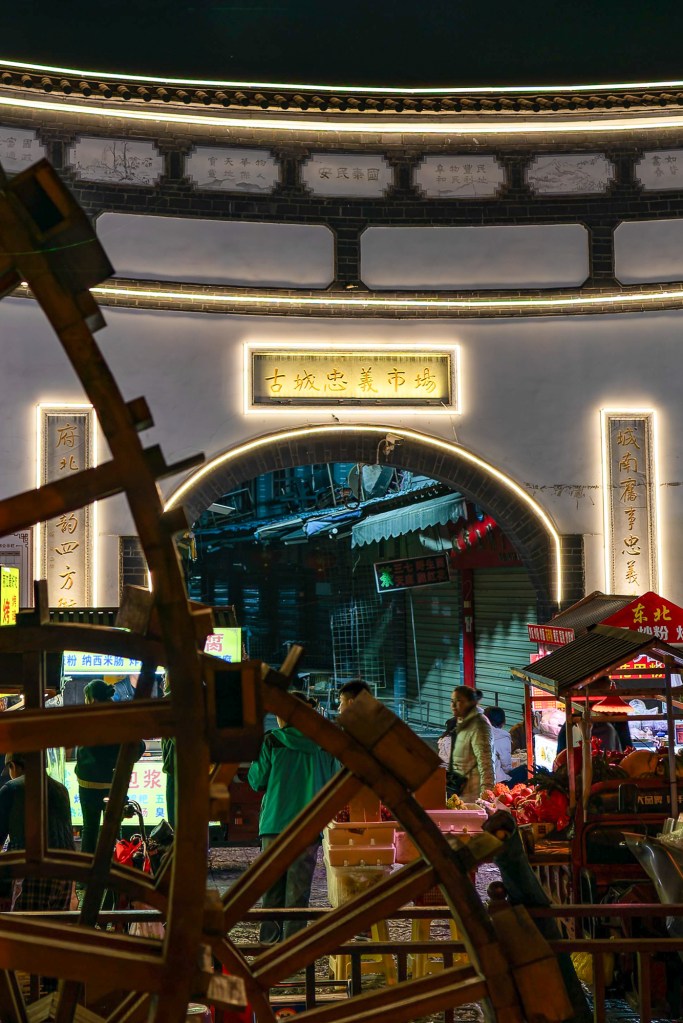

Returning to Sifangjie, I saw streets filled with umbrellas, and the bar street also seemed to have some liveliness, though the sparse crowd still highlighted the off-season’s quietness.
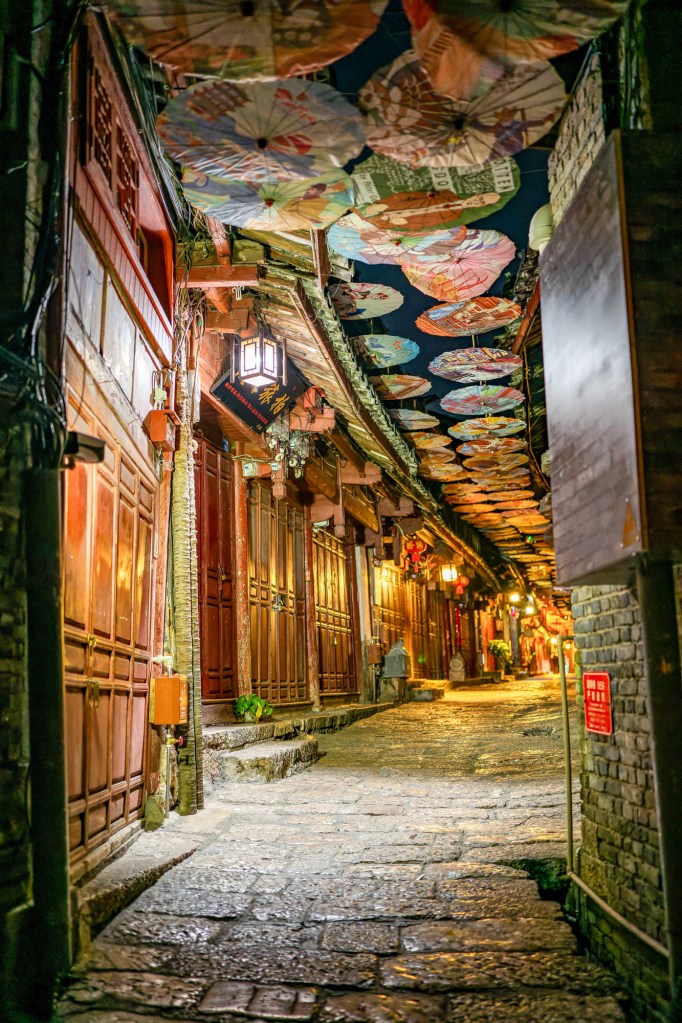
Lijiang Ancient Town is much larger than Dali Ancient Town. By the time I returned to the guesthouse, it was past midnight, and the cold air outside was biting, with temperatures dropping below 5 degrees. I was grateful for the oil heater keeping the room warm.
As I turned off the lights and went to sleep, I was pleasantly surprised to find moonlight streaming through the window onto the blanket. Lying in the loft, in front of the ancient wooden window, this scene of moonlight on the bed felt like a return to childhood.


 行之有思 Shawn’s Travel Diary