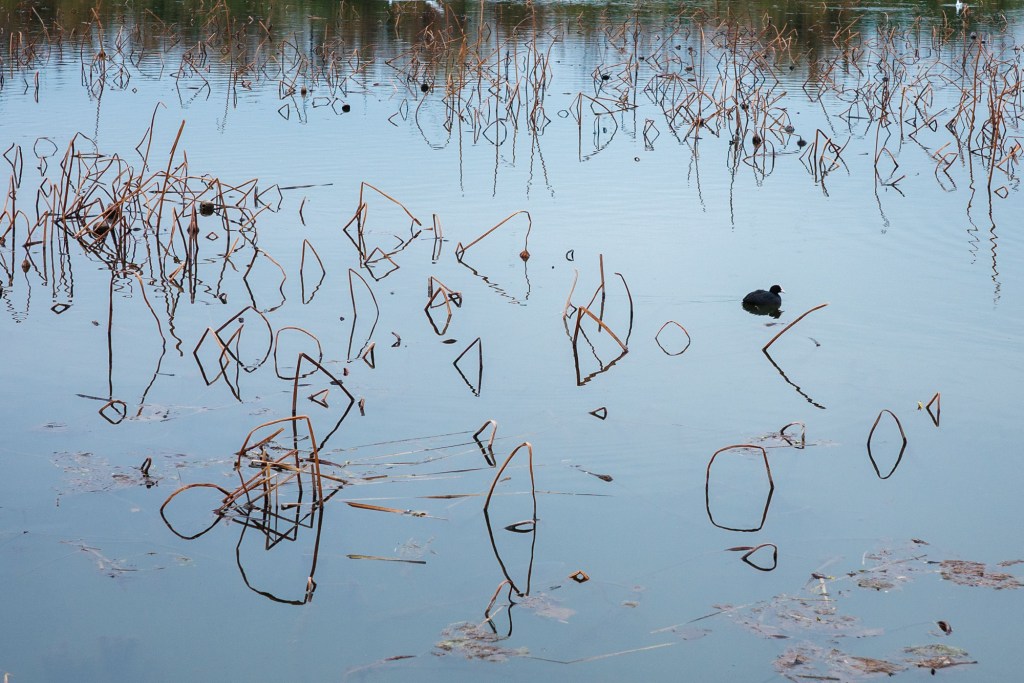
With half a day of free time before leaving Kunming at the end of the year, I decided to take a walk by Dianchi Lake early in the morning. After all, I had yet to see the seagulls in Kunming since the beginning of winter this year. Passing through Yongchang Wetland, the bleakness of winter enveloped me, with drooping, withered lotus stems reflecting in the water, resembling the lingering lotus paintings of Wu Guanzhong, serene and poetic.

There were conspicuous no-parking signs by Dianchi Lake, limited to legal holidays and weekends from November to March each year. It was evidently designed to avoid traffic congestion while watching the seagulls, a measure specifically instituted for the seagulls that is rarely seen elsewhere.
Although it was a chilly morning, not the best time for seagull watching, there weren’t many seagulls in the sky over Dianchi Lake. However, the Haigeng Dam was already crowded with tourists and various livestreamers. Amid the livestreamers’ commentary to the camera, seagulls circled and soared, their cries echoing, but most showed little interest in the breadcrumbs thrown by visitors. Feeding seagulls, checking in with seagulls, and taking photos with seagulls—this kind of intimate interaction between humans and nature’s spirits has somehow become a trend.

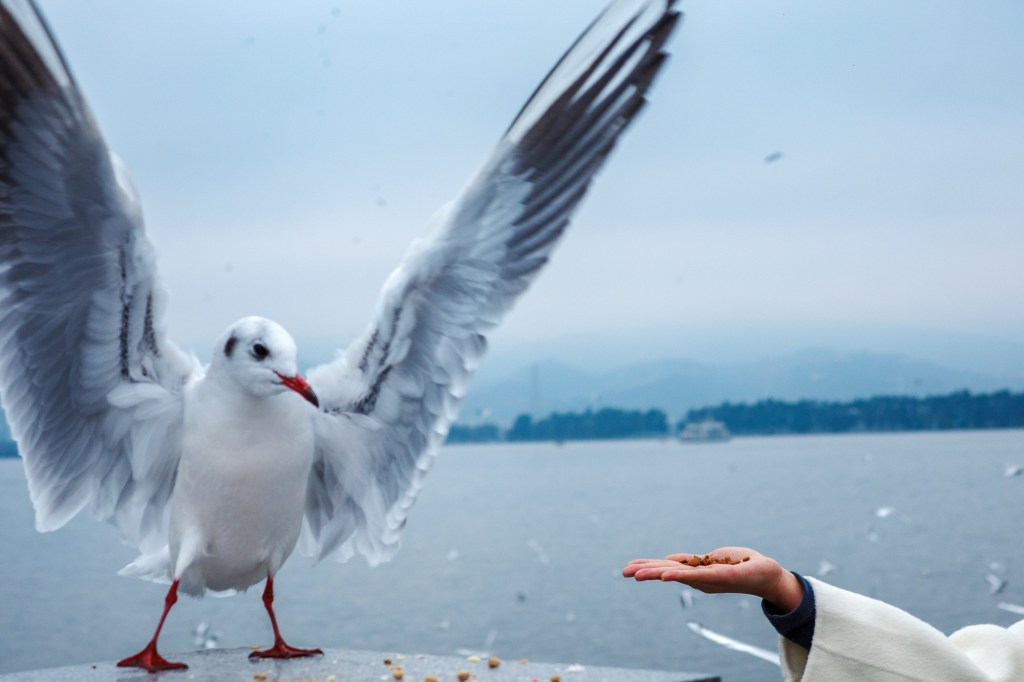
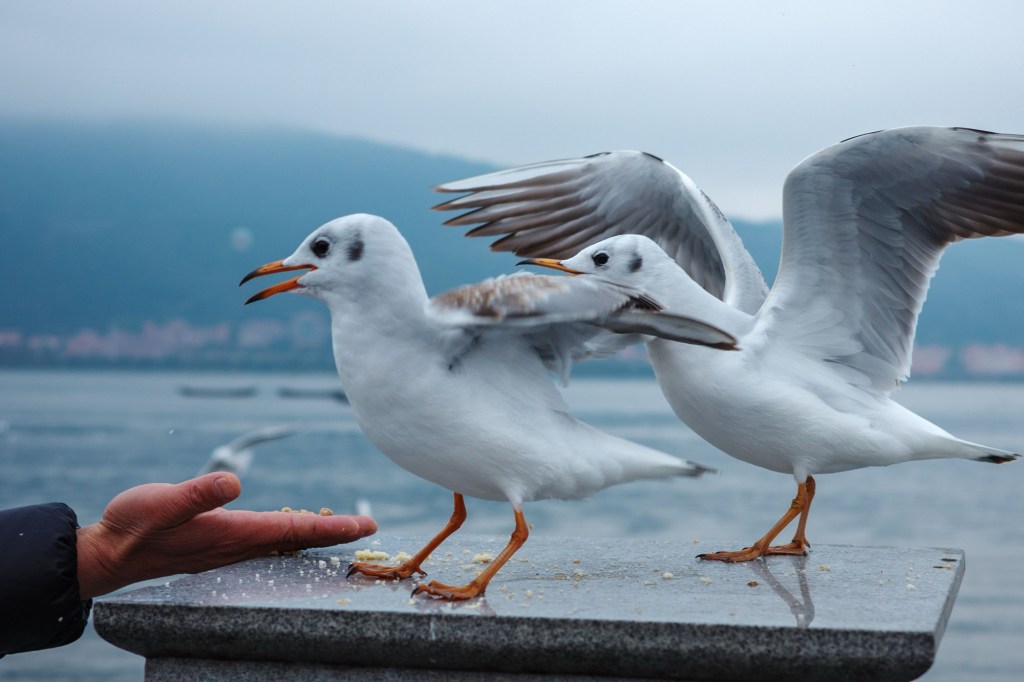


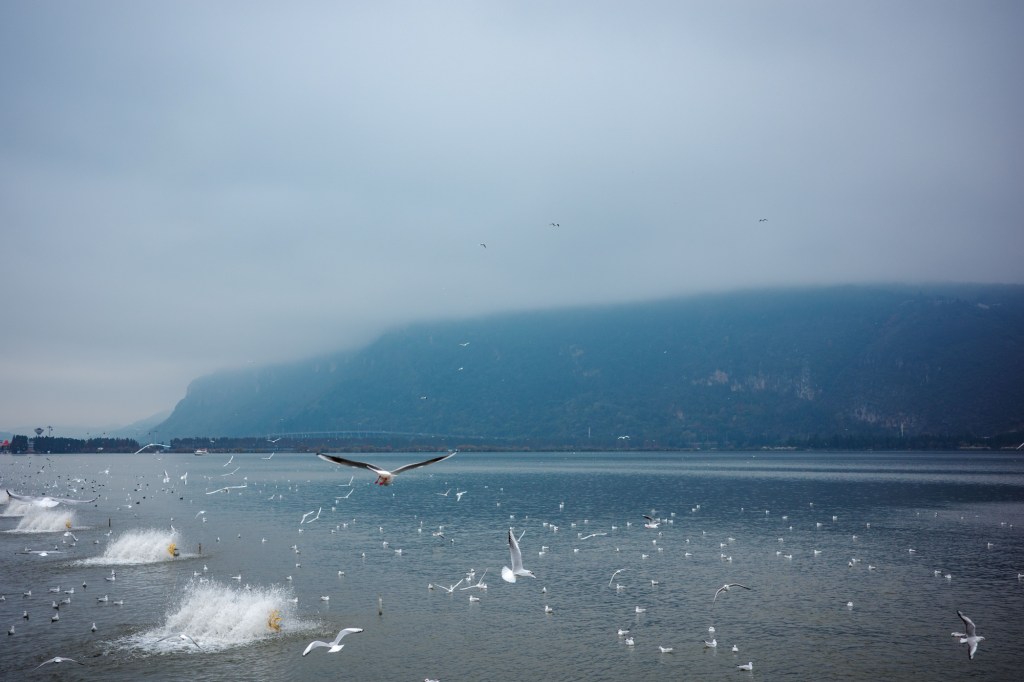
Walking to the southern, less crowded area, I gazed across the lake at the distant Xishan Mountain shrouded in thin mist, hazy and elusive. The seagulls quietly perched on the railing, seemingly enjoying a moment of leisure. I couldn’t help but think of the seagulls by the Erhai River in Dali, where they freely fished and soared in an undisturbed realm. Perhaps, their winter vacation is not something they wish to be overly disturbed by humans.


 行之有思 Shawn’s Travel Diary