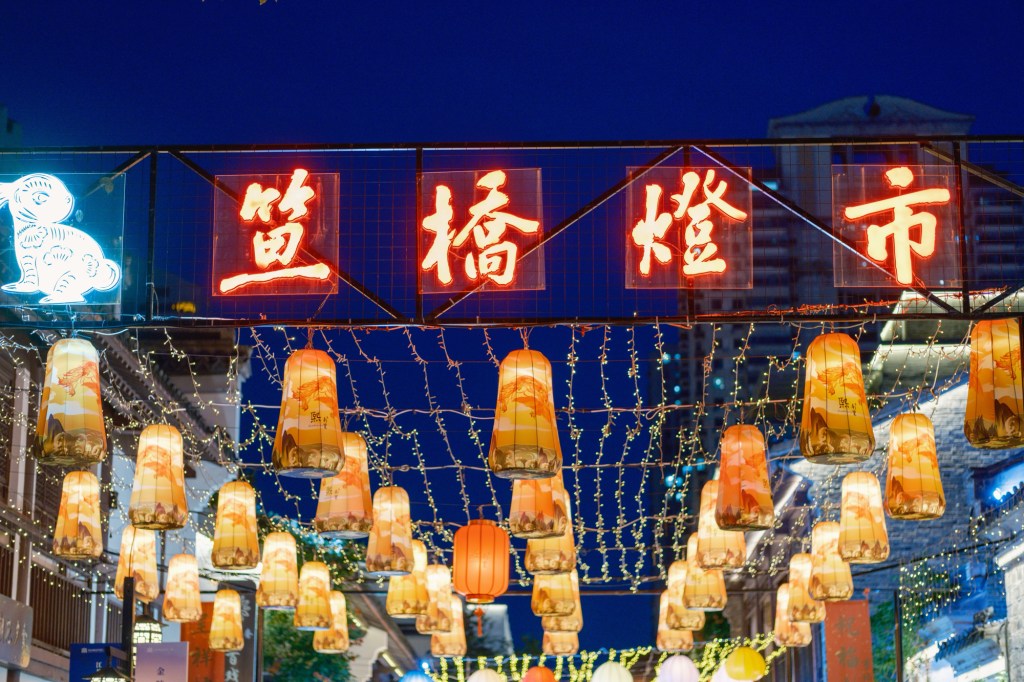
The Daqiao Lantern Market in Xinanli is perpetually strung with glowing lanterns, lending an air of elegance and quietude to the old city’s south side. Yet, the blackboard at the alley’s entrance keenly keeps pace with the times. Capitalizing on the hype of the Jiangsu soccer game (Su-Chao), it’s been updated with the boastful local phrase, “Jiao Nan Ge” (Call Us Big Brother Nan). This blend of provocation and playful sarcasm about its provincial capital status perfectly encapsulates the subtle urban psyche of Nanjing—a city confined to the southwest corner, often jokingly dubbed “Huijing” (capital of Anhui, referring to its close ties to Anhui province).
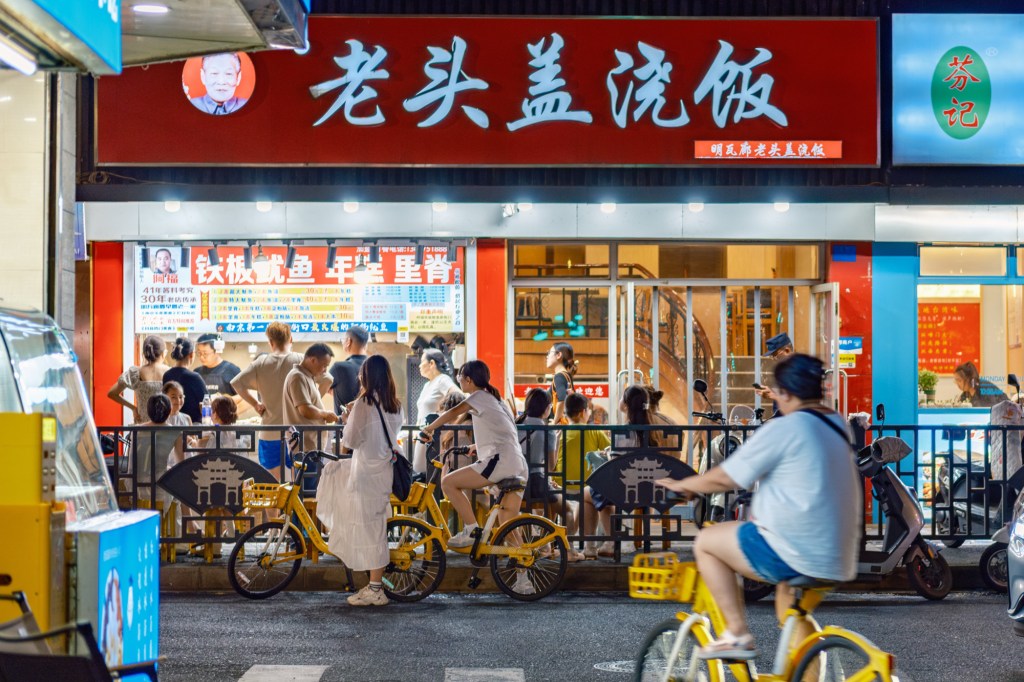
Heading north, walking through bustling city lanes until reaching Mingwalang, the ultimate foodie haven closest to the city center. Everything from the widely popular Duck Blood and Vermicelli Soup to the more polarizing Huozhuzi (fertilized egg) is available. The most dominant word on the signs here is undoubtedly “Yā” (Duck). Seeing it so often is like being back in school and having to write a misspelled word a hundred times—the character itself starts to look visually strange.
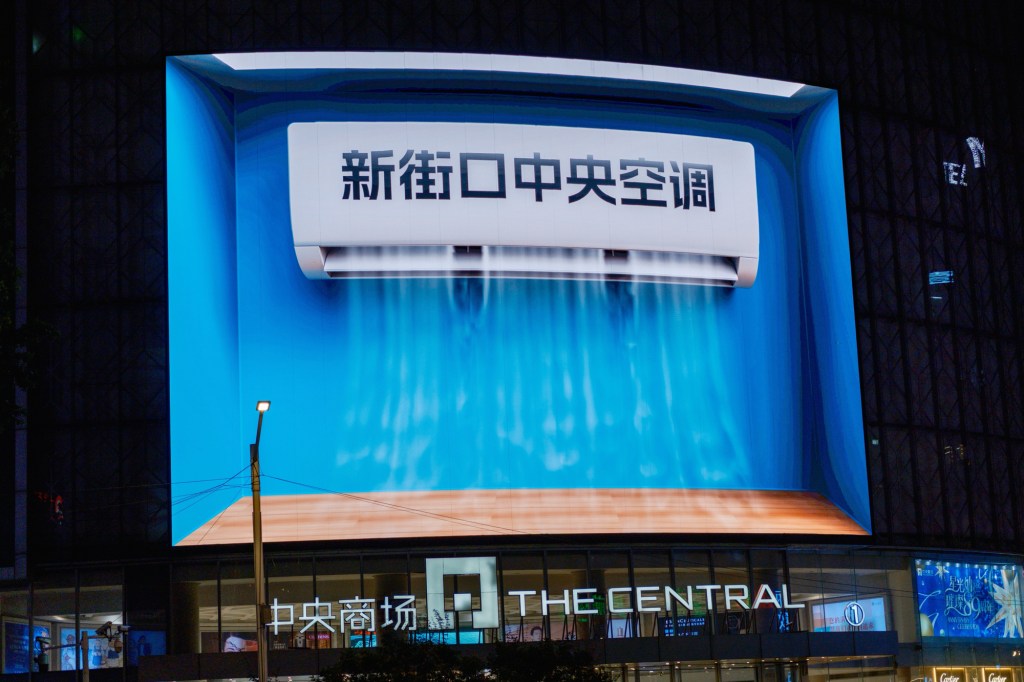
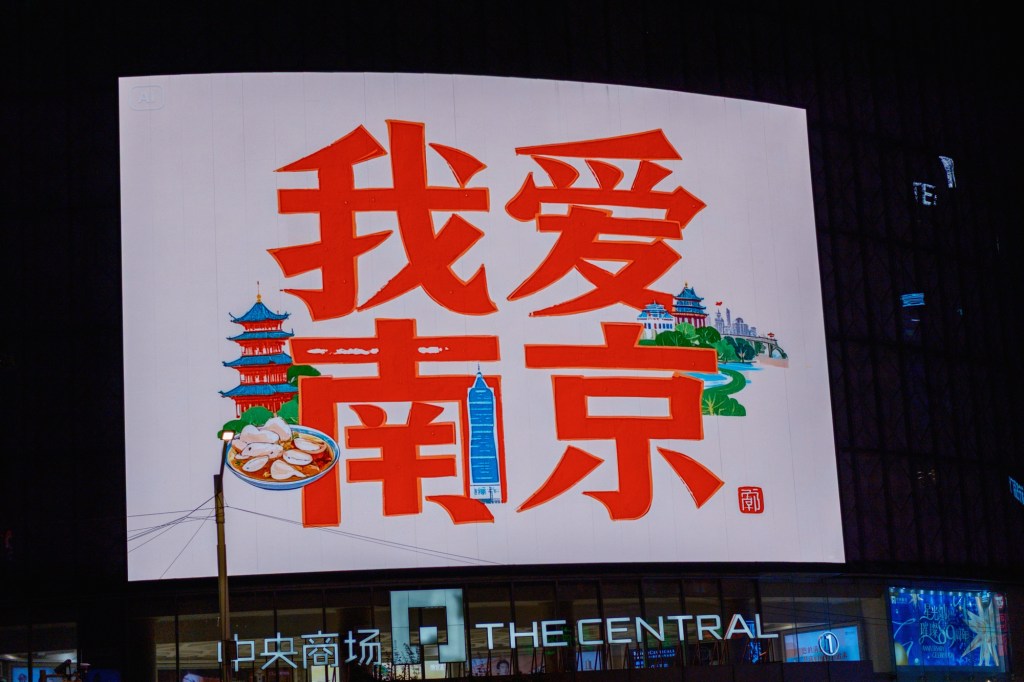
Across the street from the snack area, the massive billboard for Central Mall (Zhongyang Shangchang) stands towering. Time has moved on: Nanjing is no longer the capital, and National Central University has been renamed. But this ninety-year-old Republican-era mall retains the name “Central.” Amidst the constant evolution of the Xinjiekou business district, it continues to radiate robust vitality—a truly rare and fascinating sight in the context of urban transformation.







 行之有思 Shawn’s Travel Diary