Early in the morning, under a light drizzle, I checked the weather map and impulsively decided to seek refuge from the rain in Zhejiang province. Shaoxing was too far, so I settled on the nearby city of Huzhou. This city, named after Taihu Lake, carries the regret of having lost the lake to Jiangsu Province for the Shengsi Islands, leaving Huzhou with the irony of having “no lake.”
This was my first visit. I skipped the lakeside and opted for an afternoon CityWalk route downtown: Feiying Pagoda – Huzhou Writing Brush Museum – Lianhuazhuang Park – Yishang Street – Xiaoxi Street.
An hour-long high-speed train brought me to the station at noon. On the way to Feiying Pagoda, I saw the sign for “Xisai Mountain Road,” which instantly brought to mind Zhang Zhihe’s poem, “White egrets fly before Xisai Mountain, mandarin fish are plump in the peach blossom stream.” It is said that this Fisherman’s Song (Yugezi) was composed by him while corresponding with Yan Zhenqing, the Prefect of Huzhou at the time.
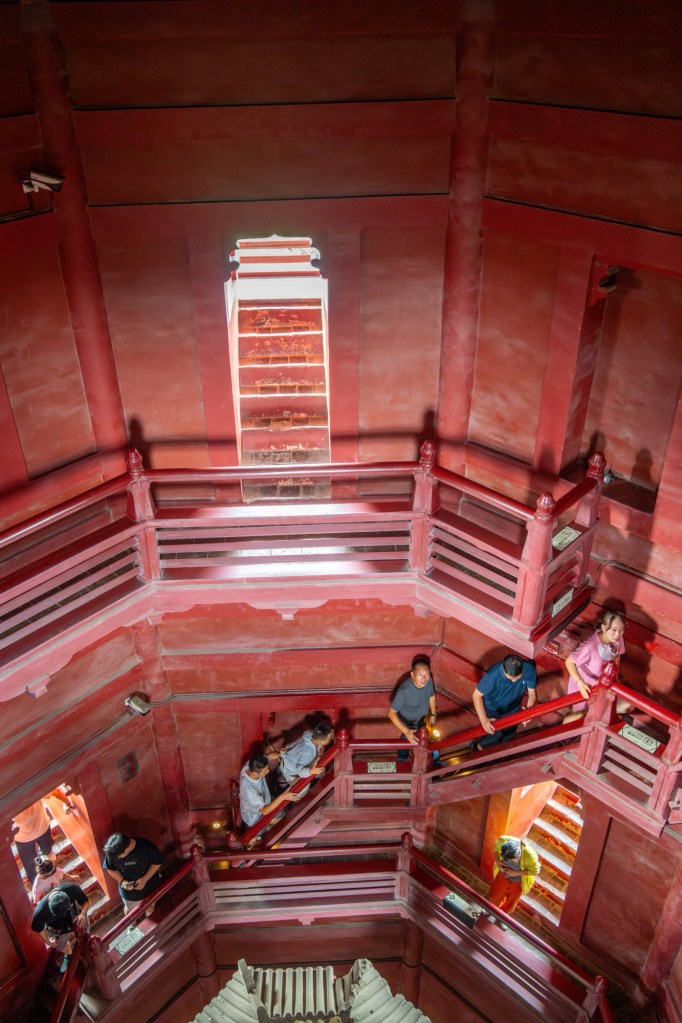
Feiying Pagoda was first built in 884 AD (Tang Dynasty) as a simple stone pagoda. During the Kaibao era of the Northern Song Dynasty, a brick-and-wood structure was added around it, resulting in today’s unique structure of an inner Tang stone pagoda encased by an outer Song wooden one. The internal staircase is extremely narrow. Although the top of the stone pagoda is ruined, the Buddhist statues on each side remain vivid. Inscriptions on the sides list the donors’ names and prayers. One donor identified himself as a “Nanjing person of the Great Song Dynasty.” Initially, I assumed this meant modern-day Nanjing, but considering it predates the Ming Dynasty, the Song Dynasty “Nanjing” here should refer to modern-day Shangqiu, Henan.
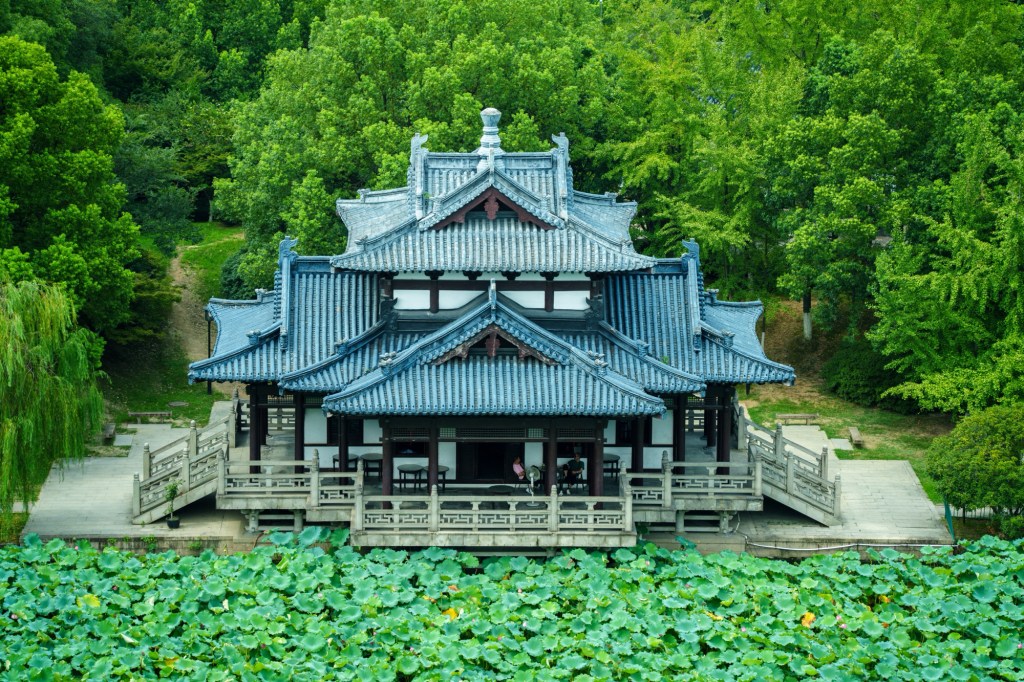
After viewing the newly opened lotus flowers in Feiying Park, I passed by Shuzhuangtai Street (Dressing Table Street). The name Yishang Street (Clothing Street) was strange enough—why was this street named so? Legend has it that this area was the residence of Empress Zhang Yao’er of the Southern Chen Dynasty before her wedding.
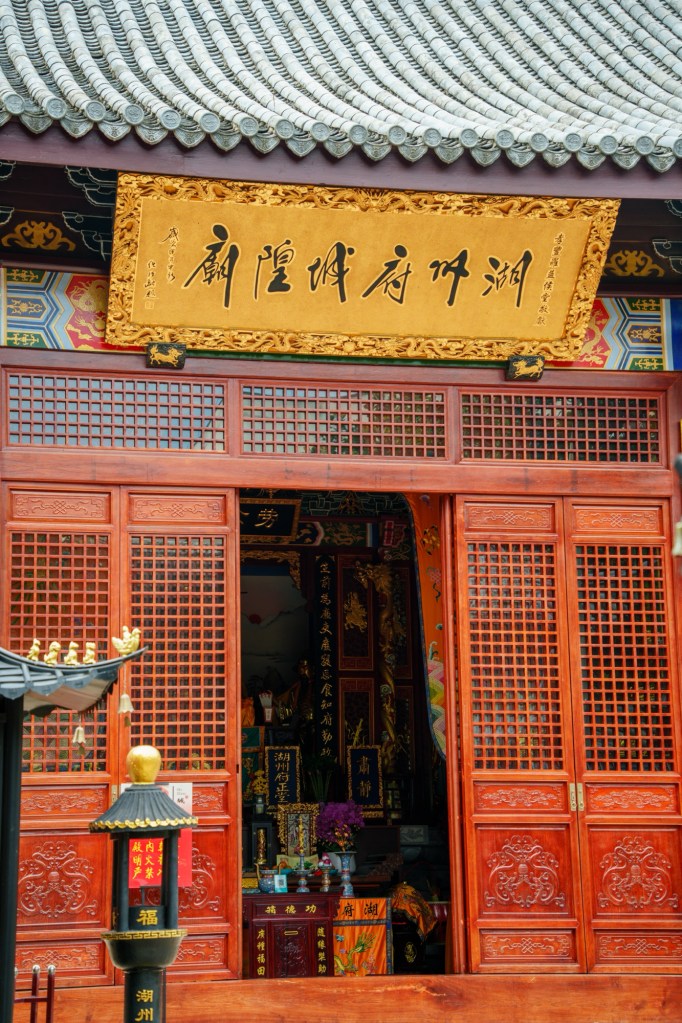
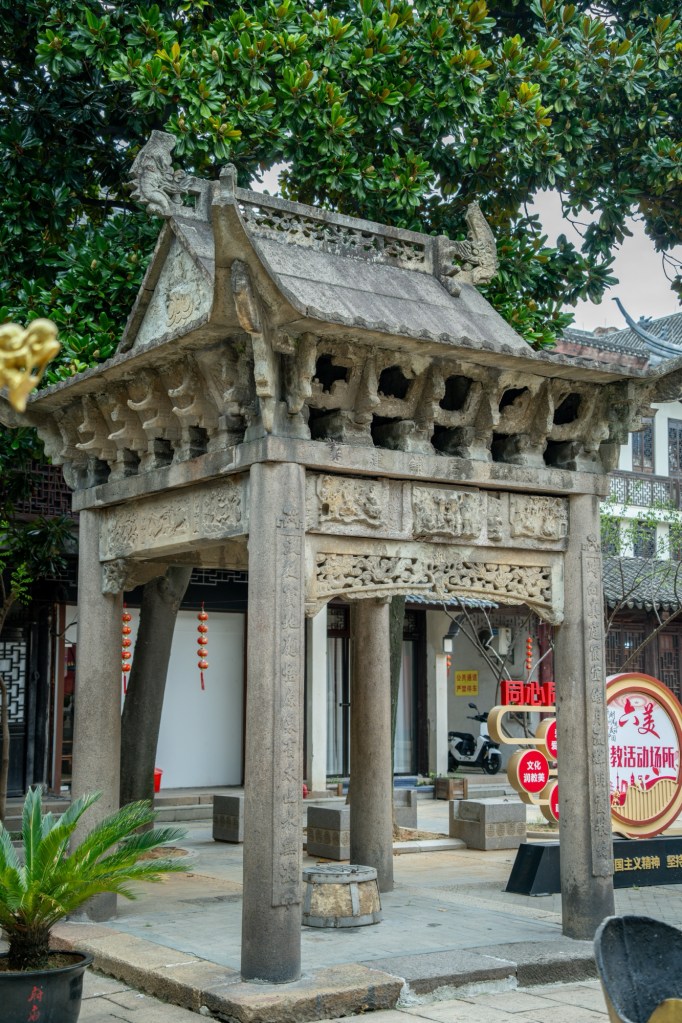
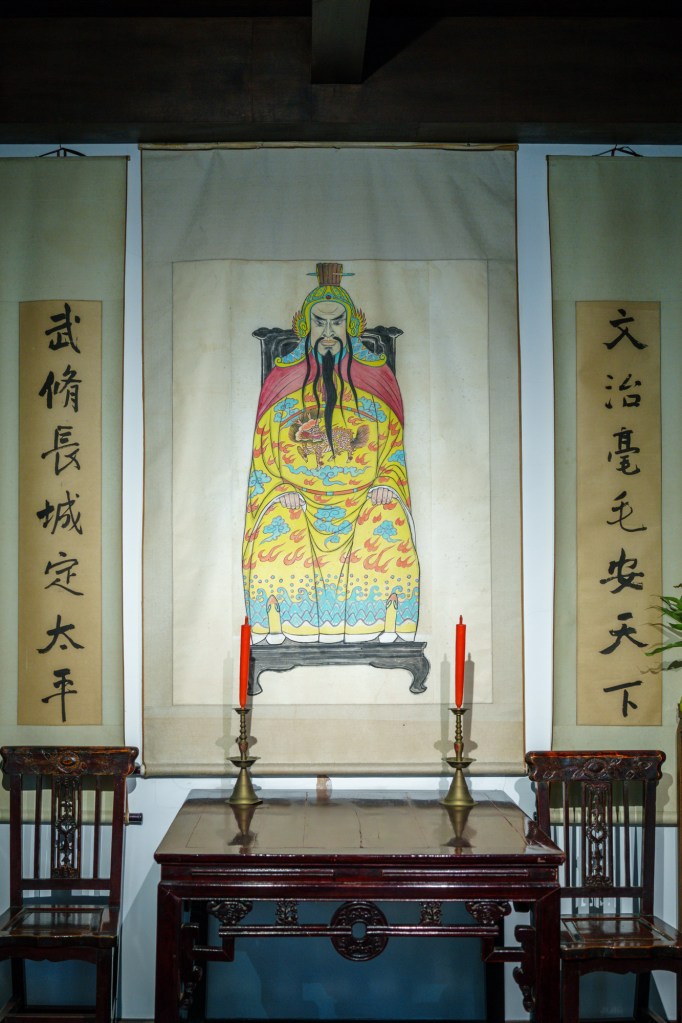
I then came across the Chenghuang Temple (City God Temple). Its main hall retains its Ming Dynasty architectural style. In front stand two pavilions built during the Guangxu era, housing a well and a bell, rather than the usual bell and drum towers. This setup uniquely symbolizes a “warning bell,” intended to alert officiating officials that “Heaven has discerning eyes for both good and evil,” a rather uncommon feature.
Heading south, I passed Luotuo Bridge (Camel Bridge). Why is a place in Jiangnan named after a desert camel? It turns out this was originally an ancient arch bridge built in the Tang Dynasty, named for its hump-like shape. This is the very location where Su Shi, during his brief three-month tenure as Huzhou Prefect, wrote in his poem: “Today I anchor beneath the Camel Bridge, leisurely watching the silver knives emerge from the repaired nets.”
The Huzhou Writing Brush Museum, not very large, is located west of Lianhuazhuang Park (Lotus Manor Park). It mainly displays the evolution of the writing brush from the Xuan brush to the Huzhou brush since the Yuan Dynasty, offering a typical example of industrial transfer spurred by warfare. Also interesting are the cultural belief worshipping the Qin general Meng Tian as the ancestor of brush-making, and the connection between Zhao Mengfu and Huzhou brushes (Lotus Manor is rumored to be his former property).
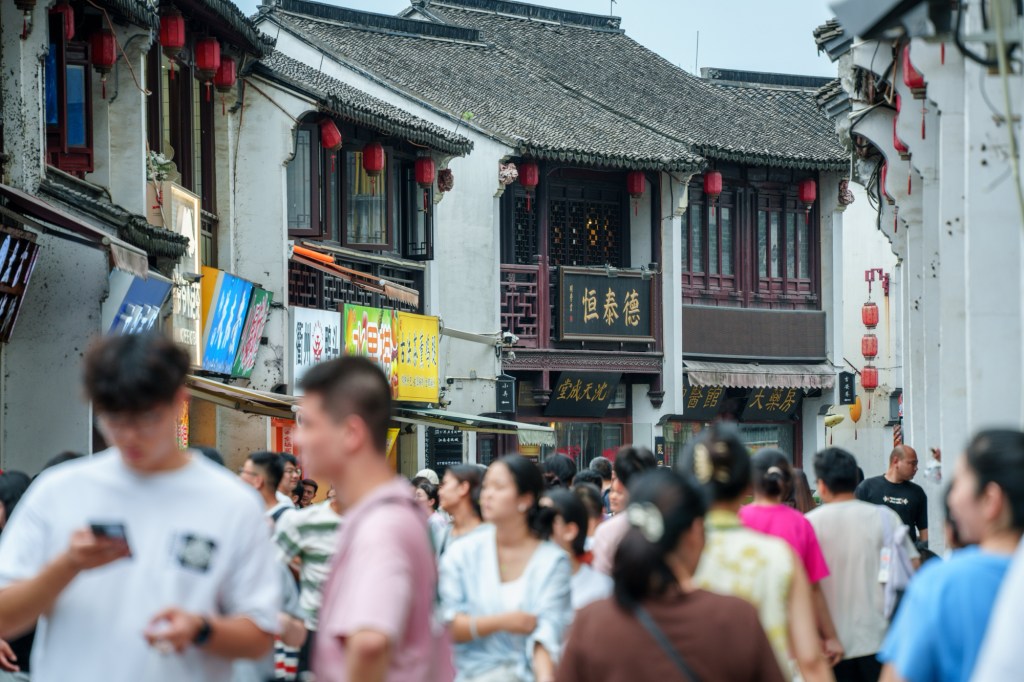
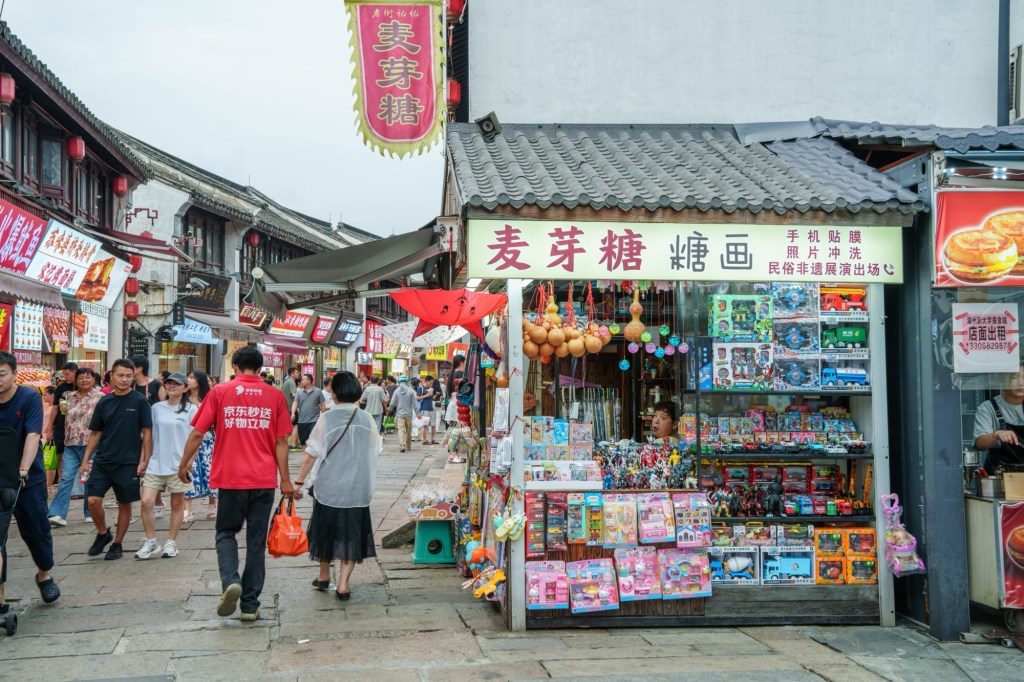
Yishang Street traces its origins back to the Eastern Jin Dynasty. It was the mandatory route from the Huzhou Prefecture seat to the post station during the Song and Ming Dynasties. By the mid-Qing period, it became the main commercial district, featuring dozens of shops selling ready-made clothes and dowries—hence the name “Clothing Street.” Today, however, it feels more like a snack street. One side of the street runs along the Tiaoxi Stream, which originates from Tianmu Mountain, merging from the East and West Tiaoxi Streams in Huzhou city center before flowing north into Taihu Lake. There are many old bridges over the river, including the Republican-era Tiao Liang Bridge. Across the river, the late Qing official Shen Jiaben Memorial Hall is unfortunately closed.
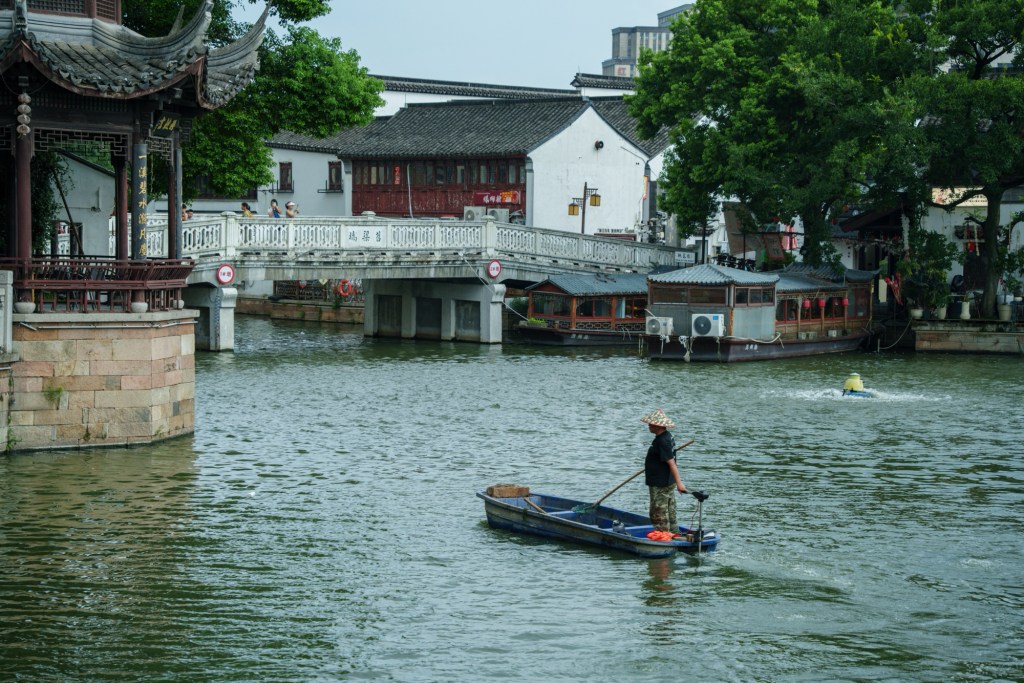
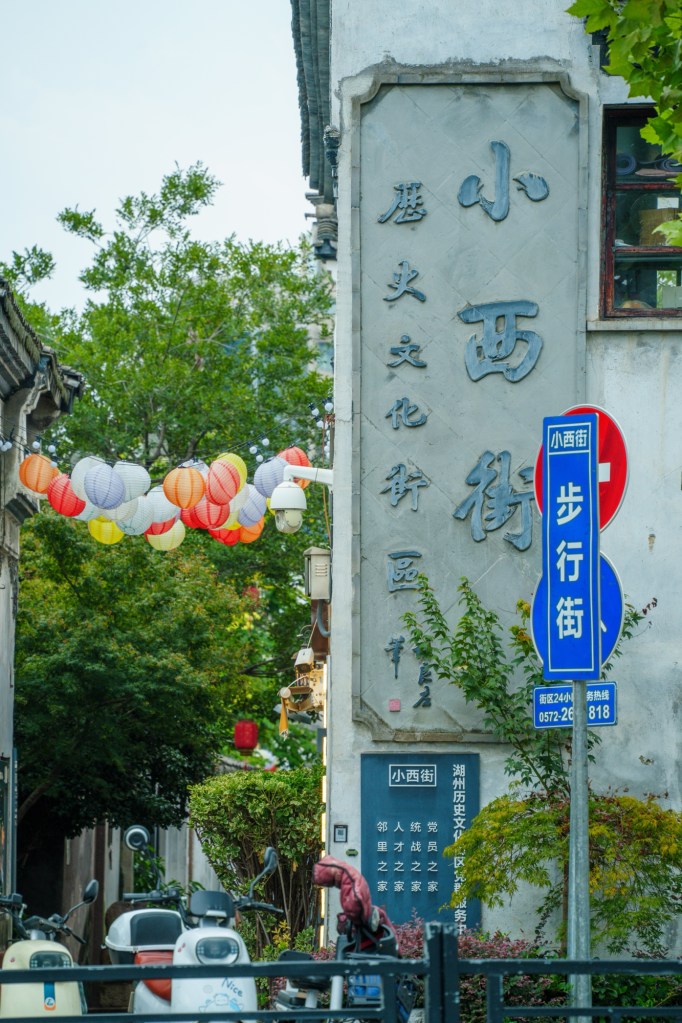
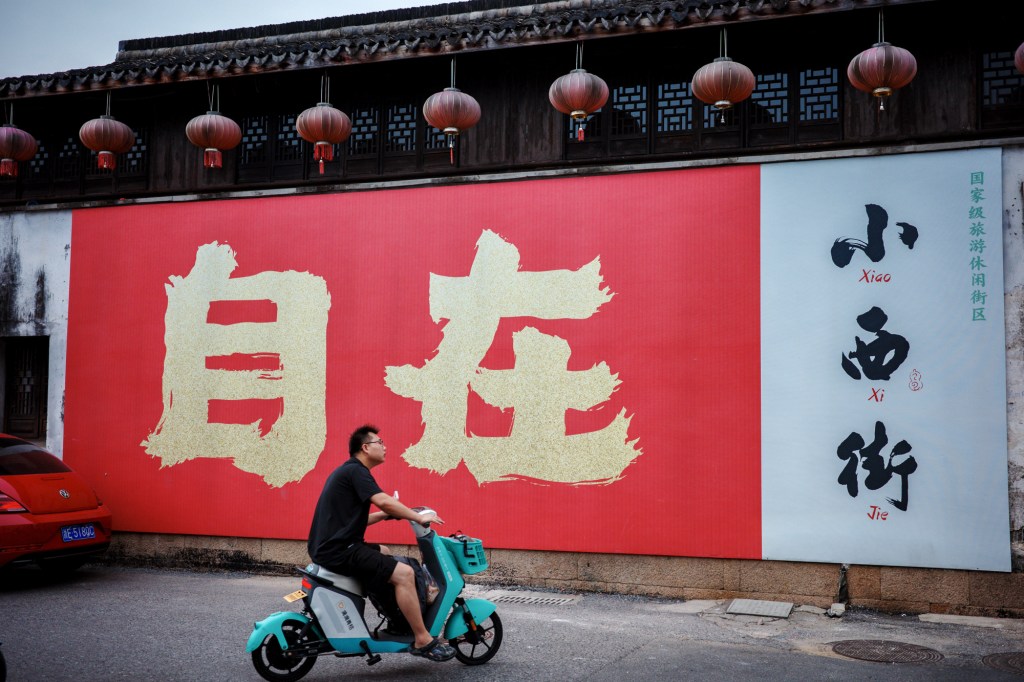
Not far away, Xiaoxi Street is another historical and cultural district, showcasing a stronger Jiangnan water town ambiance. It was historically the residential area for prominent local families, wealthy merchants, and officials, including the relatively rare Niu clan—the maiden family of Empress Zhang Yao’er. Historical buildings like the Niu Clan’s Zhuangyuan Hall and the Yong’an Bridge still stand here, offering a much quieter atmosphere than Yishang Street.
After walking all afternoon, despite the overcast sky, it remained stiflingly hot and sweaty. As sunset approached, the sky turned from gold to dark black, suggesting heavy rain was imminent. By the time I rushed back to Nanjing, the air was filled with the cool, refreshing breeze after the rain.














 行之有思 Shawn’s Travel Diary